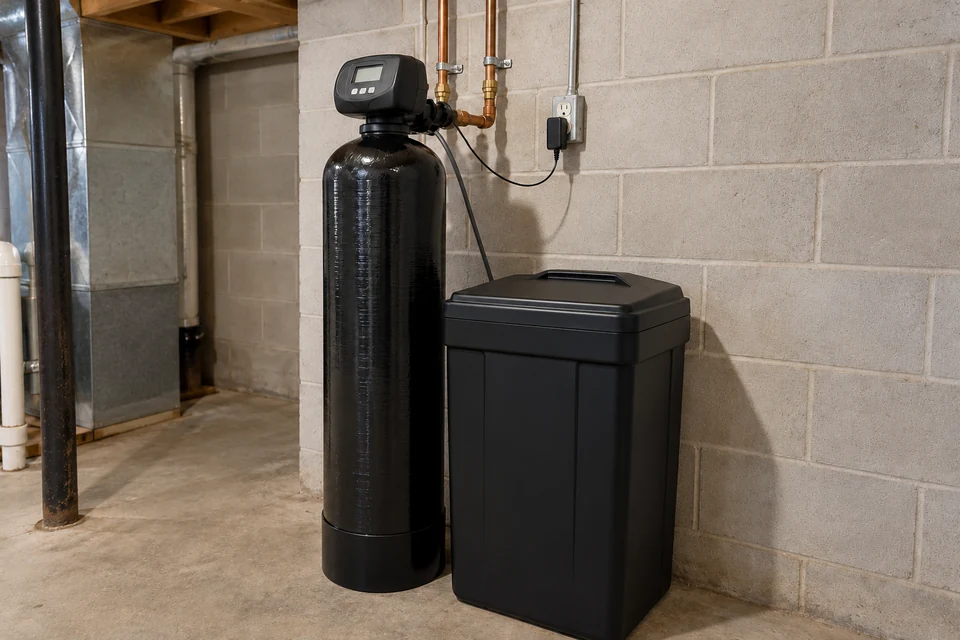

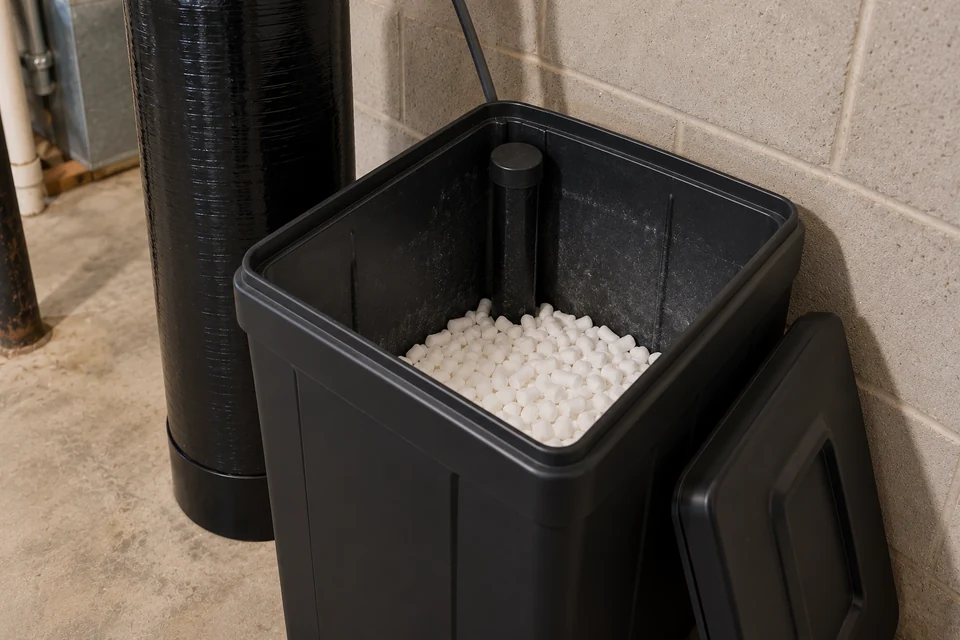
How Ion Exchange Recharges the Resin
Cation-exchange softeners remove calcium and magnesium by exchanging ions on a resin bed. The regeneration cycle uses salt and water to recharge that resin for further softening. Exact cycle stages vary by model, and units do not act as universal drinking-water purifiers.
Demand-Initiated vs. Fixed Timer Operation
Demand-initiated systems track water usage rather than regenerating on arbitrary calendar schedules. This balances salt and water efficiency based on actual household demand. Because EPA WaterSense does not label softeners, evaluate manufacturer performance data directly.
- Demand systems monitor metered volume to avoid unnecessary recharges.
- Calendar timer units regenerate on fixed intervals regardless of household water use.
Avoiding Salt and Water Waste
Programming errors directly impact ongoing operating efficiency:
Check your actual supplier information or well-water results and confirm hardness at the home.
- Higher-than-tested hardness settings trigger frequent, wasteful recharges.
- Excessive cycles accelerate salt consumption and discharge volumes.
- Programming should match verified tap test results and manufacturer guidelines.
Planning Brine Discharge Routes
Managing salty discharge requires careful property planning:
- Confirm manufacturer drain and discharge requirements.
- Verify septic compatibility and capacity for salt discharge.
- Consult local building and plumbing authorities on approved drainage points.
- Do not assume a floor drain, sump or outdoor area is an acceptable discharge destination.